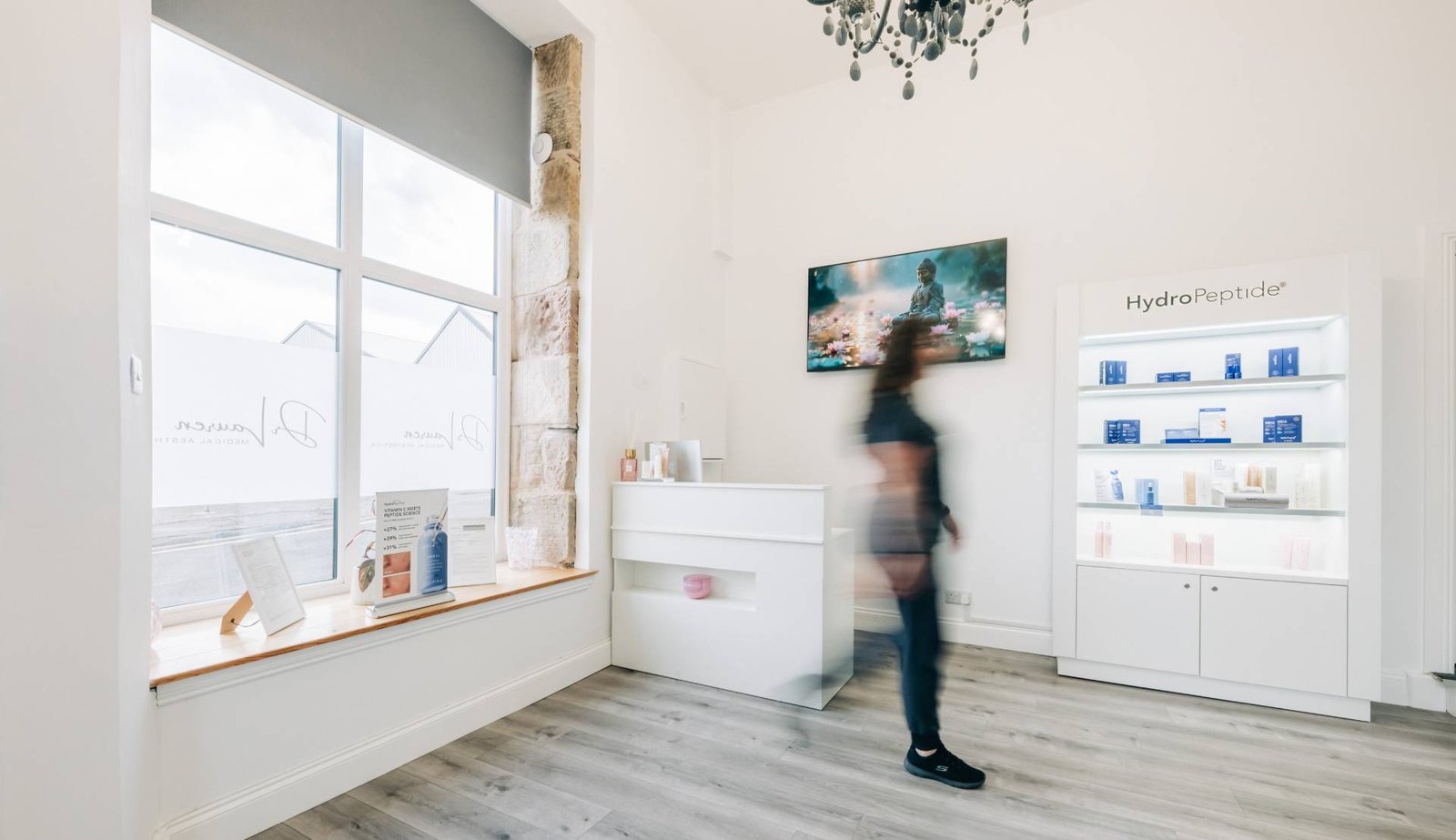
The aesthetics industry has come a long way.
What was once a relatively small, specialist sector has developed into a diverse community of medical professionals, skin specialists, clinic owners, educators and entrepreneurs.
And Scotland has some exceptional people working within it.
But as the industry develops, so do the expectations placed upon it.
From regulation and patient safety to professional education and the realities of running a successful clinic — the landscape is changing.
And that raises important questions:
Are we simply going to adapt to those changes? Or could we help shape what comes next?
A New Chapter for Scottish Aesthetics
One of the most significant developments is the introduction of new legislation governing non-surgical cosmetic procedures in Scotland.
The Non-surgical Procedures and Functions of Medical Reviewers (Scotland) Act 2026 represents an important step towards a more consistent approach to patient safety and professional standards.
The legislation introduces restrictions around certain procedures, including requirements relating to where they can be carried out and the involvement of appropriate healthcare professionals.
A separate licensing framework will also cover specified lower-risk procedures.
The main new operating restrictions are scheduled to take effect from September 2027, giving businesses time to prepare.
For some practitioners, these changes will require considerable adjustments.
For others, they may formalise standards already embedded in their daily practice.
But whatever our individual circumstances, the direction is clear.
The expectations of our industry are rising.
And we believe that’s a conversation worth having together.
Standards Should Be Something We Share
Regulation is important.
But legislation alone doesn’t create an excellent industry.
People do.
The practitioners who invest in their education.
The clinic owners who put patient safety before short-term revenue.
The educators who share their experience.
And the businesses willing to challenge how things have always been done.
Professional standards aren’t simply about meeting the minimum requirements.
They’re about the culture we create around our work.
And there’s a real opportunity for Scotland’s aesthetics community to help shape that culture.
Not through competition over who has the most qualifications, the largest clinic or the biggest social media following.
But through a shared commitment to doing things well.
Raising the bar shouldn’t be something we leave to regulators.
The Business Behind the Practice
There’s another side to this conversation that deserves just as much attention.
The business of aesthetics.
Because delivering excellent treatments and building a sustainable clinic are two different challenges.
Practitioners are navigating decisions around staffing, equipment, pricing, patient acquisition, product partnerships and increasingly complex operating requirements.
And many are doing so while continuing to deliver treatments themselves.
It’s a lot to manage.
The reality is that clinical expertise doesn’t automatically come with commercial expertise.
Nor should we expect it to.
But a financially healthy, well-run business creates the conditions for excellent clinical care to thrive.
It allows practitioners to invest in education, employ good people, improve facilities and take a longer-term view of patient relationships.
Strong businesses can support stronger clinical standards.
And stronger clinical standards can help build stronger businesses.
We don’t believe these ambitions should be separated.
There’s More to Gain by Working Together
One of the things that excites us most about Scotland’s aesthetics community is the experience already sitting within it.
Across the country, practitioners are solving problems, developing new approaches, building successful clinics and learning valuable lessons.
Often independently of one another.
Imagine what becomes possible when more of that experience is shared.
When a practitioner in Glasgow can learn from a clinic owner in Aberdeen.
When someone starting their first business can benefit from the experience of someone who’s been doing it for twenty years.
When brands, educators and practitioners have more opportunities to meet, exchange ideas and develop meaningful relationships.
Not every conversation needs to lead to a partnership.
Not every introduction needs to become a commercial opportunity.
Sometimes the value is simply learning something you didn’t know yesterday.
That’s how a community becomes stronger.
Putting Scotland on the Map
Scotland might be a relatively small market.
But that doesn’t mean we should have small ambitions.
We have talented practitioners, ambitious clinic owners, respected educators and businesses doing exceptional work.
And we believe there’s an opportunity to make Scotland an increasingly important part of the wider aesthetics conversation.
A place where standards are taken seriously.
Where professional development is encouraged.
Where exciting brands and technologies want to establish relationships.
And where we feel connected rather than isolated.
We don’t need to wait for someone else to put Scotland on the map.
We can do that together.
So, Are We Ready?
The next few years will bring changes.
Some will be driven by regulation.
Others by technology, patient expectations, new treatments and the commercial realities of operating an aesthetics business.
We won’t all agree on everything.
And we won’t all face the same challenges.
But we believe the best way to approach the future is with curiosity, collaboration and a willingness to keep learning.
That’s one of the reasons we created RxLab.
Not because we have all the answers.
But because we believe Scotland’s aesthetics community has an enormous amount to offer when the right people come together.
The industry is changing.
Let’s help shape what comes next.
Together, We Raise the Bar